Centre for Youth Voice Share your work

Youth Matters

Youth Matters and youth-led funding

Youth Matters, the national youth strategy for England, says young people should help shape the money spent on them, and decide some of it. Here is the new £450 million behind it, the 60 places it will reach, and free tools to do it well.

Last updated 19 November 2026. Youth Matters covers England.

Announced 13 November 2026

£450 million for youth provision in 60 places

DCMS has named the 60 council areas in England where the Youth Matters Fund Programme will invest: the places where need is highest and young people say there is least to do. Councils in those areas share an initial £20 million this year, and the main fund of over £400 million is expected to open for applications in early 2027. In both, DCMS wants young people to shape what gets funded.

  • £450mthe Youth Matters Fund Programme, the largest youth investment programme DCMS has made
  • 60council areas in England, chosen by need and by what young people said
  • £20man initial investment paid to those 60 councils this financial year
  • Early 2027when the main fund, over £400 million, is expected to open for applications

The announcement in detail

What was announced

The programme comes in two phases, for the same 60 places. Words in quotation marks are DCMS's own.

Phase 1: grants to councils, this year

  • An initial £20 million of revenue funding in 2026/27, paid straight to the 60 councils. There is no competition to enter.
  • Every council gets £100,000, plus an amount for each young person that is higher where need is higher. Grants run from £133,029 to £898,483.
  • It is for “fun and enriching activities and youth work”, mainly open to all, with a focus on young people least likely to take part.
  • It must add to what the council already spends on youth services, not replace it.
  • Councils are expected to work with local organisations, and can pass money on as grants, including grants to young people for their own projects.

Phase 2: the Youth Matters Fund, from 2027

  • Over £400 million from April 2027, most of it for buildings and equipment.
  • Expected to open for applications in early 2027, to councils and to eligible voluntary, community and social enterprise youth organisations in the same 60 areas.
  • Social Investment Business will run it with the National Youth Agency, UK Youth, UK Community Foundations, Young People's Foundation Trust and Sharpe Pritchard.
  • DCMS's aim is to create, expand, improve or preserve up to 250 youth facilities, and it expects over 2,000 facilities and projects to benefit in all.

What it asks on youth voice

“Local areas will be expected to show how they are meeting these principles in funding applications.”
  • The principles are those of the Youth-Led Funding Toolkit, which DCMS points to as the guide for the whole programme.
  • Councils with a grant this year should, at a minimum, be able to show how they are embedding the toolkit's five principles and what its eight stages look like for them.
  • They should also show how young people influenced what is funded, who delivers it and for whom.
  • DCMS wants to encourage “youth-led grants” now, and youth-informed commissioning, participatory budgeting or delegated budgets in the longer term.
  • Councils will report to DCMS on how it goes, which may include “metrics on the decisions influenced by young people”.

Where the 60 places are

Each dot is one council area, sized by its grant this year. The 60 are the upper-tier local authorities DCMS ranks highest for need.

Sheffield: £898,483 in 2026/27. Ranked 12 of 153 for need.Essex: £864,178 in 2026/27. Ranked 48 of 153 for need.County Durham: £777,713 in 2026/27. Ranked 11 of 153 for need.Norfolk: £730,784 in 2026/27. Ranked 33 of 153 for need.Liverpool: £711,715 in 2026/27. Ranked 18 of 153 for need.Lincolnshire: £650,027 in 2026/27. Ranked 35 of 153 for need.Nottingham: £615,018 in 2026/27. Ranked 24 of 153 for need.Suffolk: £613,258 in 2026/27. Ranked 32 of 153 for need.Birmingham: £550,141 in 2026/27. Ranked 58 of 153 for need.Newcastle upon Tyne: £526,198 in 2026/27. Ranked 13 of 153 for need.Hull: £458,975 in 2026/27. Ranked 2 of 153 for need.Sunderland: £423,374 in 2026/27. Ranked 7 of 153 for need.Rotherham: £421,947 in 2026/27. Ranked 9 of 153 for need.Wirral: £395,124 in 2026/27. Ranked 20 of 153 for need.Worcestershire: £394,776 in 2026/27. Ranked 43 of 153 for need.Leeds: £391,342 in 2026/27. Ranked 49 of 153 for need.Doncaster: £389,929 in 2026/27. Ranked 22 of 153 for need.Stoke-on-Trent: £387,914 in 2026/27. Ranked 17 of 153 for need.Wakefield: £355,261 in 2026/27. Ranked 26 of 153 for need.Manchester: £349,494 in 2026/27. Ranked 51 of 153 for need.Wigan: £341,510 in 2026/27. Ranked 36 of 153 for need.Southampton: £338,561 in 2026/27. Ranked 30 of 153 for need.Tameside: £333,808 in 2026/27. Ranked 19 of 153 for need.Salford: £330,932 in 2026/27. Ranked 27 of 153 for need.Barnsley: £323,607 in 2026/27. Ranked 16 of 153 for need.Stockton-on-Tees: £301,331 in 2026/27. Ranked 23 of 153 for need.Rochdale: £294,432 in 2026/27. Ranked 29 of 153 for need.Middlesbrough: £294,336 in 2026/27. Ranked 5 of 153 for need.North Northamptonshire: £293,533 in 2026/27. Ranked 44 of 153 for need.Portsmouth: £288,539 in 2026/27. Ranked 25 of 153 for need.Gateshead: £288,239 in 2026/27. Ranked 21 of 153 for need.Knowsley: £285,662 in 2026/27. Ranked 10 of 153 for need.Sefton: £285,056 in 2026/27. Ranked 34 of 153 for need.North East Lincolnshire: £284,335 in 2026/27. Ranked 4 of 153 for need.Peterborough: £282,890 in 2026/27. Ranked 28 of 153 for need.Solihull: £266,703 in 2026/27. Ranked 31 of 153 for need.St. Helens: £266,078 in 2026/27. Ranked 15 of 153 for need.Derby: £258,100 in 2026/27. Ranked 39 of 153 for need.Blackpool: £256,894 in 2026/27. Ranked 6 of 153 for need.Halton: £254,870 in 2026/27. Ranked 1 of 153 for need.Redcar and Cleveland: £254,862 in 2026/27. Ranked 8 of 153 for need.Oldham: £251,628 in 2026/27. Ranked 42 of 153 for need.Shropshire: £246,229 in 2026/27. Ranked 45 of 153 for need.East Sussex: £244,452 in 2026/27. Ranked 60 of 153 for need.Cumberland: £228,513 in 2026/27. Ranked 41 of 153 for need.Swindon: £224,634 in 2026/27. Ranked 40 of 153 for need.Hartlepool: £220,960 in 2026/27. Ranked 3 of 153 for need.Torbay: £214,438 in 2026/27. Ranked 14 of 153 for need.Telford and Wrekin: £209,077 in 2026/27. Ranked 37 of 153 for need.Cheshire West and Chester: £201,717 in 2026/27. Ranked 53 of 153 for need.Westmorland and Furness: £198,403 in 2026/27. Ranked 46 of 153 for need.Walsall: £195,339 in 2026/27. Ranked 56 of 153 for need.Plymouth: £190,105 in 2026/27. Ranked 57 of 153 for need.Luton: £177,698 in 2026/27. Ranked 52 of 153 for need.South Tyneside: £173,325 in 2026/27. Ranked 38 of 153 for need.North Tyneside: £157,584 in 2026/27. Ranked 55 of 153 for need.Darlington: £155,075 in 2026/27. Ranked 47 of 153 for need.Southend-on-Sea: £151,354 in 2026/27. Ranked 50 of 153 for need.Herefordshire: £146,513 in 2026/27. Ranked 59 of 153 for need.Isle of Wight: £133,029 in 2026/27. Ranked 54 of 153 for need.
Grant this year, from £133,029 to £898,483 Dots show roughly where each council is, not its boundary.
  • 27 of the 60 are in the North West and North East
  • 11 of 12 council areas in the North East are on the list
  • 0 London boroughs are on it. The highest ranked, Havering, is 92 of 153

Council areas on the list, by region

  1. North West 16 of 24
  2. North East 11 of 12
  3. West Midlands 8 of 14
  4. Yorkshire and The Humber 8 of 15
  5. East of England 6 of 11
  6. East Midlands 4 of 10
  7. South East 4 of 19
  8. South West 3 of 15
  9. London 0 of 33

Each bar is as long as the region has upper-tier councils; the dark part is the number on the list.

Type a council, county or region. Districts are not listed on their own: look for the county or unitary council.

Need rankCouncil areaRegionGrant, 2026/27
1HaltonNorth West £254,870
2Kingston upon Hull, City ofYorkshire and The Humber £458,975
3HartlepoolNorth East £220,960
4North East LincolnshireYorkshire and The Humber £284,335
5MiddlesbroughNorth East £294,336
6BlackpoolNorth West £256,894
7SunderlandNorth East £423,374
8Redcar and ClevelandNorth East £254,862
9RotherhamYorkshire and The Humber £421,947
10KnowsleyNorth West £285,662
11County DurhamNorth East £777,713
12SheffieldYorkshire and The Humber £898,483
13Newcastle upon TyneNorth East £526,198
14TorbaySouth West £214,438
15St. HelensNorth West £266,078
16BarnsleyYorkshire and The Humber £323,607
17Stoke-on-TrentWest Midlands £387,914
18LiverpoolNorth West £711,715
19TamesideNorth West £333,808
20WirralNorth West £395,124
21GatesheadNorth East £288,239
22DoncasterYorkshire and The Humber £389,929
23Stockton-on-TeesNorth East £301,331
24NottinghamEast Midlands £615,018
25PortsmouthSouth East £288,539
26WakefieldYorkshire and The Humber £355,261
27SalfordNorth West £330,932
28PeterboroughEast of England £282,890
29RochdaleNorth West £294,432
30SouthamptonSouth East £338,561
31SolihullWest Midlands £266,703
32SuffolkEast of England £613,258
33NorfolkEast of England £730,784
34SeftonNorth West £285,056
35LincolnshireEast Midlands £650,027
36WiganNorth West £341,510
37Telford and WrekinWest Midlands £209,077
38South TynesideNorth East £173,325
39DerbyEast Midlands £258,100
40SwindonSouth West £224,634
41CumberlandNorth West £228,513
42OldhamNorth West £251,628
43WorcestershireWest Midlands £394,776
44North NorthamptonshireEast Midlands £293,533
45ShropshireWest Midlands £246,229
46Westmorland and FurnessNorth West £198,403
47DarlingtonNorth East £155,075
48EssexEast of England £864,178
49LeedsYorkshire and The Humber £391,342
50Southend-on-SeaEast of England £151,354
51ManchesterNorth West £349,494
52LutonEast of England £177,698
53Cheshire West and ChesterNorth West £201,717
54Isle of WightSouth East £133,029
55North TynesideNorth East £157,584
56WalsallWest Midlands £195,339
57PlymouthSouth West £190,105
58BirminghamWest Midlands £550,141
59Herefordshire, County ofWest Midlands £146,513
60East SussexSouth East £244,452

Rank 1 is the highest need of England's 153 upper-tier local authorities. Grants are this year's Youth Matters Local Authority Grant. Source: priority places methodology, DCMS, published 13 November 2026 and corrected 16 November 2026. The grant figures here were updated on 19 November 2026 to match DCMS's corrected table.

How the 60 were chosen

DCMS scored all 153 upper-tier councils in England on four measures and took the 60 with the highest need. The biggest weight went to what young people themselves said.

  • 30%What young people said about activities and services where they live
  • 25%Community need: few places to meet, weak connections, low local activity
  • 25%Children living in low-income families
  • 20%16 and 17 year olds not in education, employment or training

The young people's measure comes from the Youth Matters survey: whether they are happy with local activities and services, feel these are made for young people like them, and know where to go for extra help. DCMS says the weighting is there so that “funding is directed to where young people say that there is not enough for them to do or places to go”. The local figures are modelled estimates, built from the 9,475 survey answers that came with a full postcode.

What young people said, region by region

Where the main fund's money goes

Four pounds in every five are for buildings and equipment. About a tenth, £41.9 million, is for youth work and activities.

  • £260.5mBuilding and refurbishing youth facilities (63%)
  • £75mEquipment, from minibuses to computers (18%)
  • £41.9mYouth work and activities (10%)
  • £13mSupport for building projects (3%)
  • £26.3mRunning the fund and supporting grant holders (6%)

This is DCMS's indicative budget for the £416.8 million main fund, from its July 2026 guidance for delivery partners, so the final split may change. The fund can pay for “youth empowerment/co-design activities (including remuneration for young people participating in these processes)”.

Can you apply?

A council in one of the 60

Your grant for this year is already set, so there is no competition. DCMS will ask for a short plan and a payment request, then regular updates. Start with how young people will decide: the toolkit's five principles and eight stages are what DCMS will ask you about.

A youth organisation in one of the 60

This year's money goes to your council, which is expected to work with local organisations, so ask how young people and partners are being brought in. The main fund is expected to open to eligible organisations in early 2027.

Anywhere else in England

This programme is for the 60 areas only. DCMS says the separate Every Child Can Fund, designed and delivered by The National Lottery Community Fund, will launch in spring 2027 across the whole of England.

Key dates

  1. 13 November 2026DCMS names the 60 areas, this year's grants to councils and the partners who will run the main fund.
  2. Now to March 2027This year's grants to councils cover the 2026/27 financial year, with young people involved in deciding what they pay for.
  3. Early 2027The main Youth Matters Fund is expected to open for applications in the 60 areas.
  4. Spring 2027Separately, the Every Child Can Fund is due to launch across the whole of England.
  5. April 2027 to March 2030The main fund pays out. In DCMS's July 2026 plan, money for youth work and activities is to be spent by March 2029 and money for buildings and equipment by December 2029.

What to do now

Sources: Youth Matters Fund Programme; Priority places methodology; Local Authority Grants: guidance for local authorities; Youth Matters Fund; DCMS press release; Delivery partner competition guidance (July 2026).

The strategy

Youth Matters in brief

Top lines from the strategy and the funding guidance published since. Words in quotation marks are DCMS's own.

What it is

  • Youth Matters: Your National Youth Strategy is England's national youth strategy, published by DCMS on 10 December 2025.
  • It is for young people aged 10 to 21, and up to 25 for young people with special educational needs and disabilities.
  • It was shaped by over 14,000 young people.
  • It promises three shifts: “From national to local”, “From fragmented to collaborative” and “From excluded to empowered”.
  • Youth voice has a chapter of its own, “Seen and heard”.

What it says about youth participation

“Involving young people in decisions that affect them is not just fair, it makes those decisions better.”
  • DCMS will make it “a requirement of DCMS youth funding for programmes to be co-designed with young people”, unless there is a good reason not to.
  • Local areas that receive youth funding “should be able to clearly demonstrate strong partnership working with young people”. Where they can't, DCMS says “we will seek alternative local delivery partners”.
  • The Youth Matters Fund guidance says: “We believe that successful youth provision must engage young people at every stage.”

What it says about youth-led funding

“Young people will design the Fund and decide how it is spent.”

The strategy, on its new Richer Young Lives Fund of over £60 million over three years.

  • DCMS will start a ‘test and learn’ project “to understand the best ways young people can influence funding decisions at a local level”.
  • The Youth Matters Fund, which will make grants in 60 places, can pay for “youth empowerment/co-design activities (including remuneration for young people participating in these processes)”.
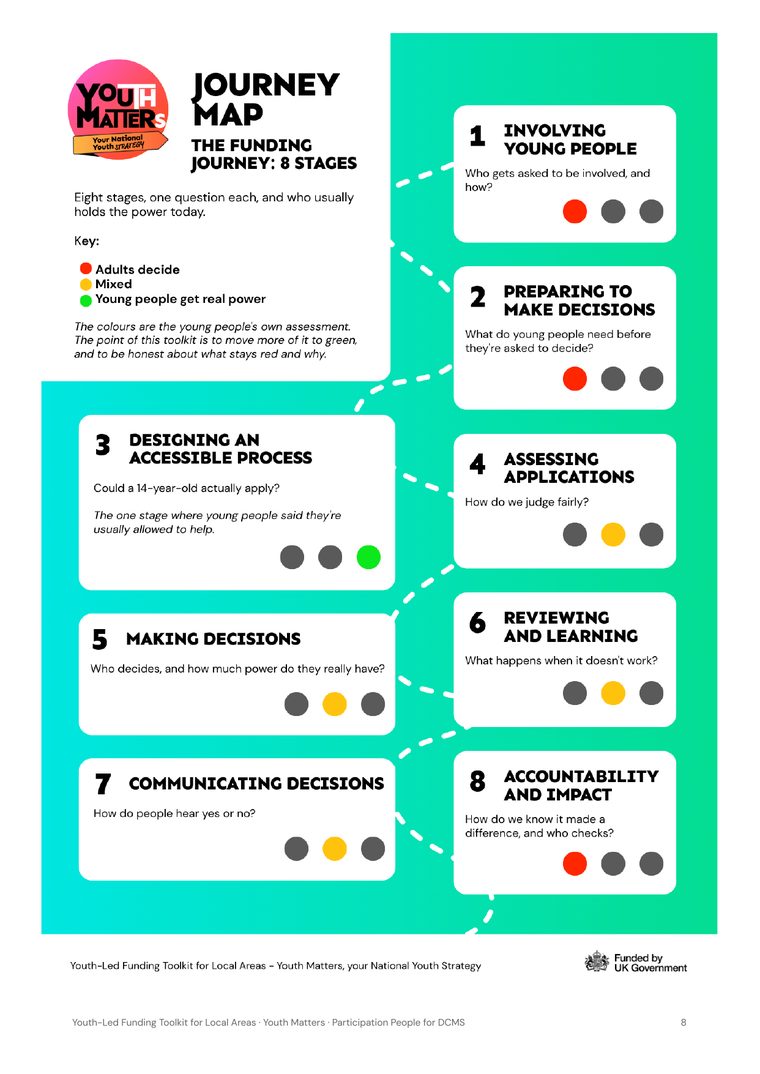
  • DCMS worked with Participation People and twelve young people to produce the Youth-Led Funding Toolkit for Local Areas to show how to do it in practice.

Sources: Youth Matters: Your National Youth Strategy, DCMS, December 2025; Youth Matters Fund: delivery partner competition guidance, DCMS, July 2026.

New toolkit · DCMS with Participation People

Youth-Led Funding Toolkit for Local Areas

Money for young people, decided with young people. A practical guide for councils, charities and local partners who set up or run funding for young people, and for the young people who help decide where it goes. It moves you from asking young people what they think to deciding with them, at any size of pot, from a £300 trip to a multi-year programme.

  • 12 young people aged 14 to 18 designed it
  • 8 stages, from who gets asked to how you know it worked
  • 16 tools and templates to use straight away
Community of practice

Join the youth-led funding community of practice

A free session for funders, councils, charities and youth organisations that are putting funding decisions in young people's hands, or getting ready to. Come to compare notes with people doing the same work.

  • Free
  • Two hours
  • Online
  • Every two months
  • Open to everyone

Join us to swap ideas and boost funding power for youth-led projects in a chill, collaborative space.

Who it's for
Anyone setting up or running funding for young people: council officers, commissioners, funders and grant-makers, charities and youth organisations, and young people who sit on panels. New to it or years in, you're welcome.
What happens
Short reflections from people doing it, from youth grant panels to participatory budgeting and young commissioners. Then most of the session is discussion: what's working, what's hard, and what to try next.
What you take away
Ideas you can use, people to call, and the tools others are working from, including the Youth-Led Funding Toolkit.

Part of the Centre's Communities of Practice, which meet every two months on a different theme.

Next session

Tue, 1 Dec 2026 · 11:00–13:00

Community of practice: Youth-Led Funding

Online · Free

Book your free place

The booking form opens here. Booking is run by Eventbrite, which sends your confirmation and the joining link. How your details are used.

Full details of the session

From the Resource Library

See more youth-led funding resources

All 56 in the library →
See all 56youth-led funding resources in the Resource Library